
General
-
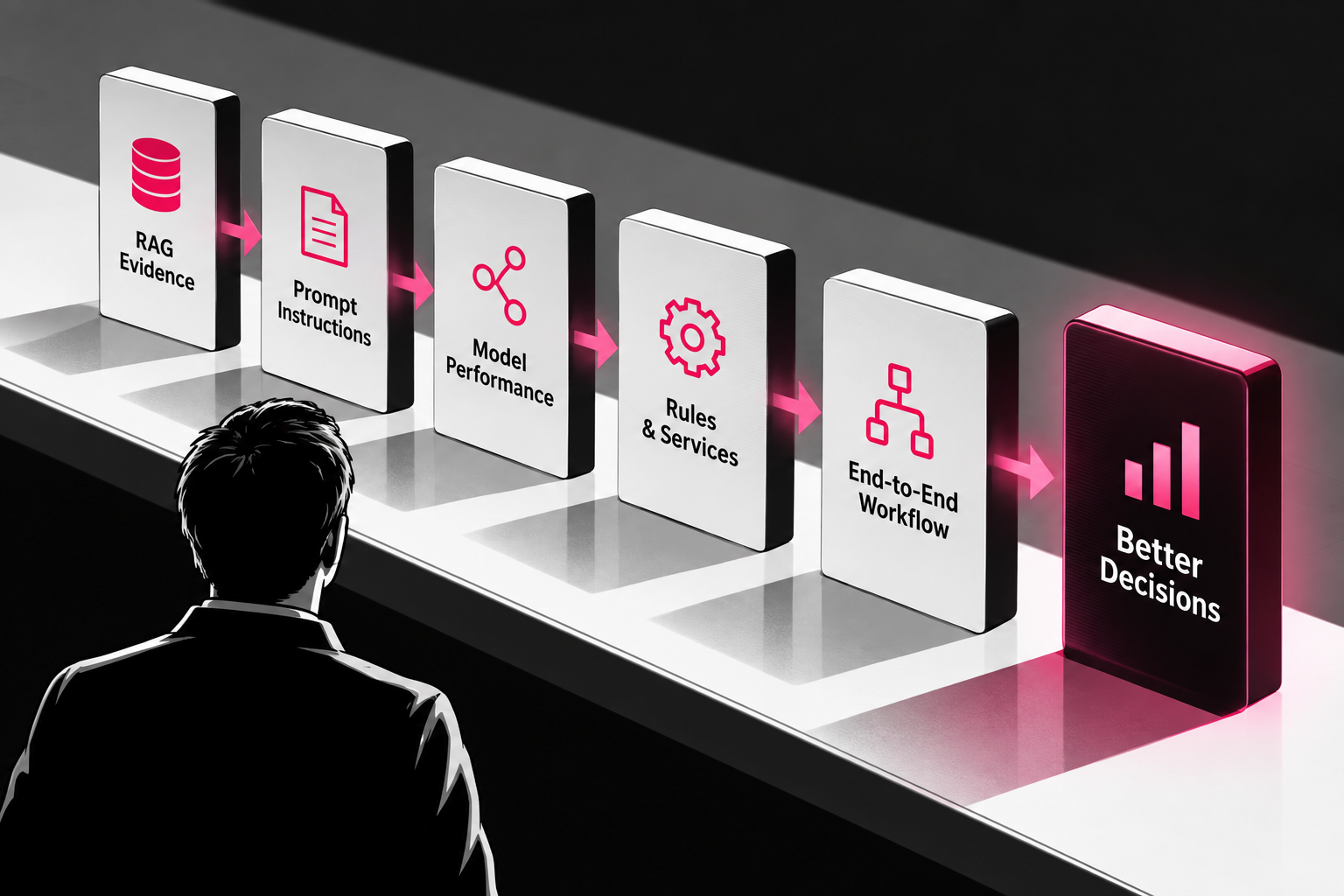
How do you test an enterprise AI system when performance is distributed across a chain of interdependent components? In this post, I outline a layered evaluation framework for RAG, prompts, GenAI models, deterministic rules, and end-to-end workflows—using a Decision Contract to define what “good” looks like. The goal is not a single AI accuracy score,…
-

As AI becomes increasingly integrated into business decision-making, the challenge shifts from generating recommendations to helping organizations understand and act on them. Building on the concept of Decision Activation, Decision Lenses and Decision Pivots provide a framework for exploring stakeholder perspectives, surfacing areas of alignment and disagreement, and navigating competing priorities and trade-offs. The next…
-
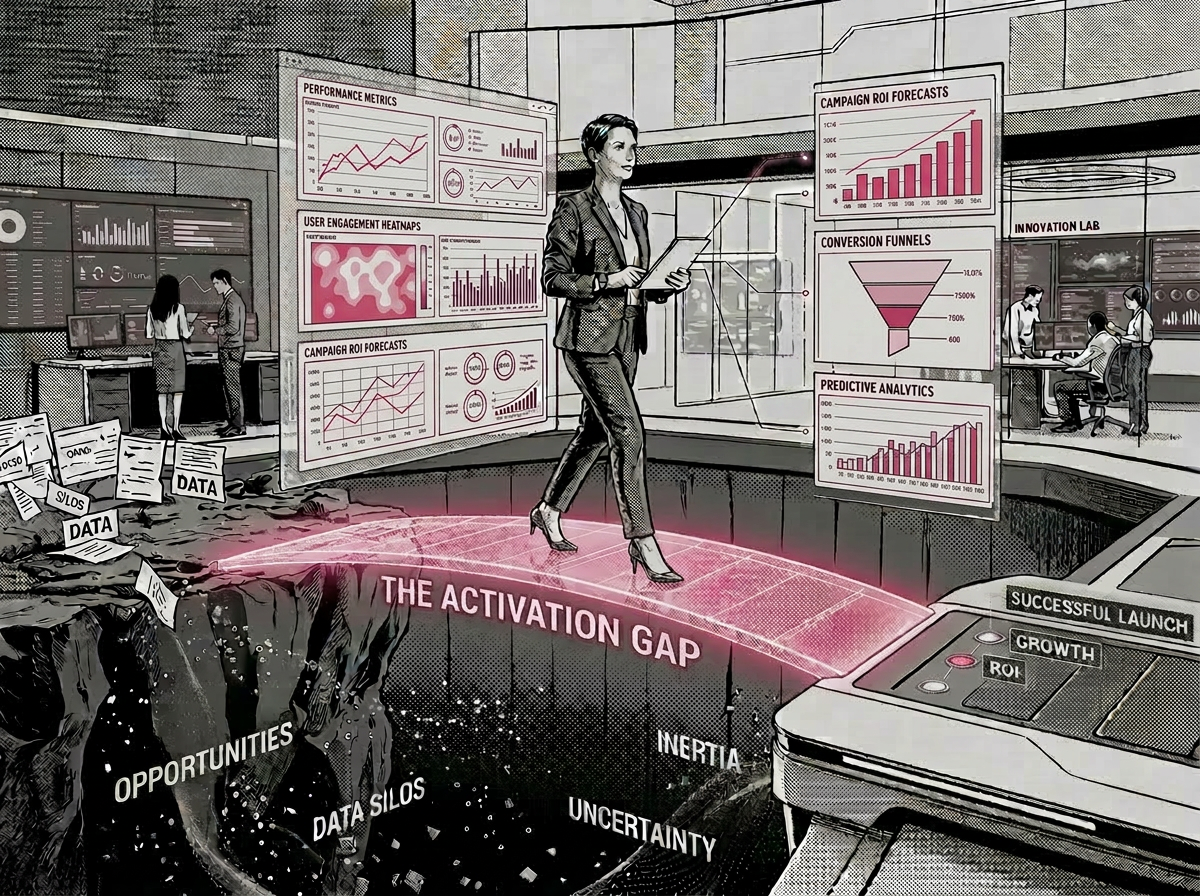
Organizations have advanced in analytics but often struggle to implement recommendations into actionable decisions. The future of decision intelligence lies in “Decision Activation,” which bridges the gap between insight and execution by promoting stakeholder alignment, accountability, and measurable actions, ensuring effective decision-making under uncertainty.
-
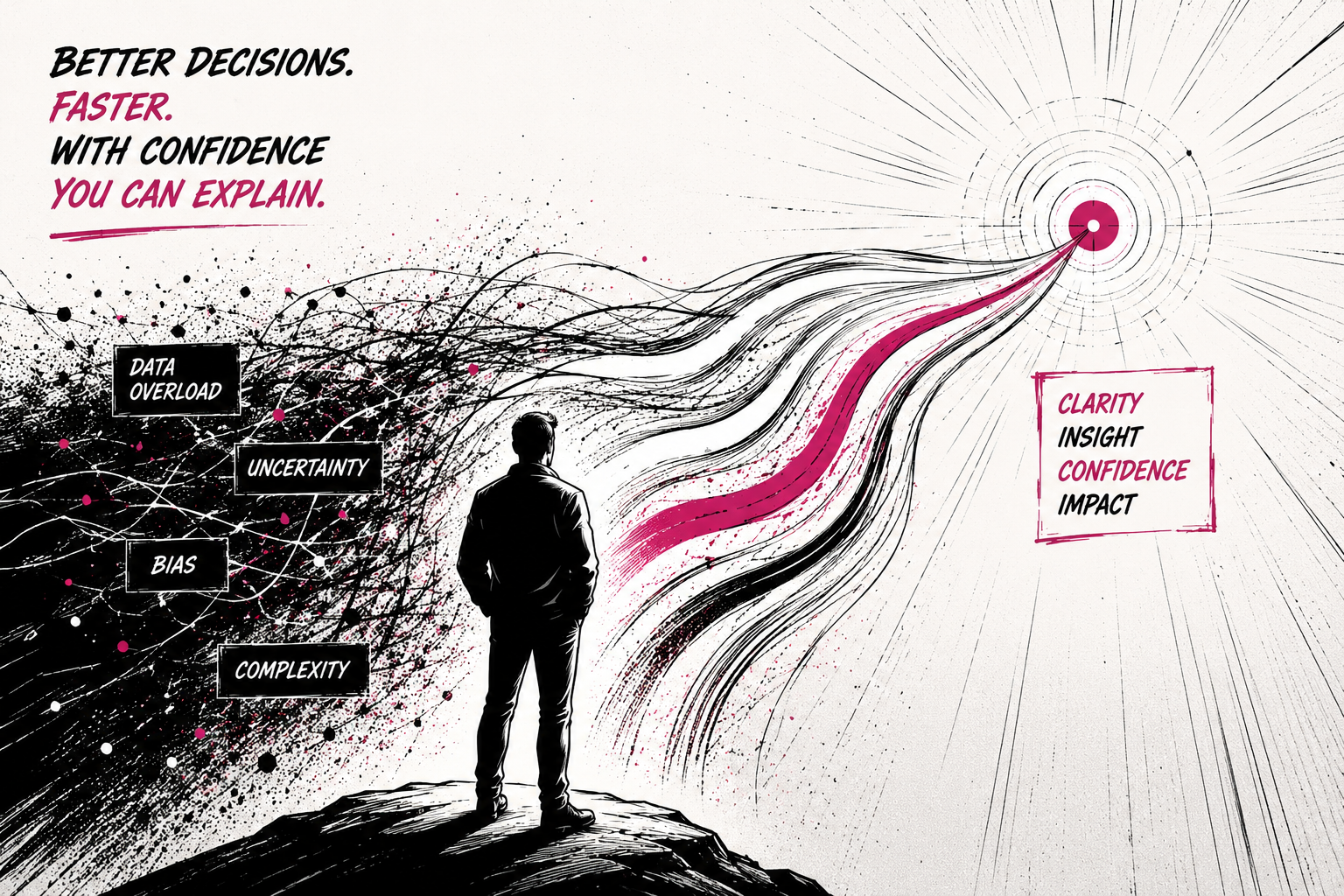
Organizations are rapidly adopting AI technologies, driven by excitement around automation. However, many overlook the need for redesigning decision-making processes, leading to ineffective systems. The future lies in AI-Assisted Decision Intelligence Workflows, which emphasize governance, prioritized actions, and collaboration between human judgment and AI, ensuring better operational outcomes.
-

Effective pipeline management is not a function of volume, but of how probabilistic outcomes respond to intervention. Pipeline behaves as a distribution of potential outcomes—each opportunity varying in likelihood, timing, and responsiveness. By identifying high-elasticity opportunities—where incremental effort can still meaningfully shift the probability of conversion within the planning window—organizations can generate disproportionate impact. This…
-

Predictive models are often rejected not because they underperform, but because leaders mistake understanding for control. The fear of a “black box” isn’t really about opacity—it’s about hesitation to trust a system when outcomes feel uncertain. Demanding full transparency can create the illusion of influence while slowing decisions and diluting accountability. What executives actually need…
-

AI has leveled the playing field of analysis. Every enterprise can now generate models, dashboards, and insights at scale. But when analytic power becomes universal, advantage shifts elsewhere—to how well organizations decide with it. In the GenAI era, success will hinge less on analytic sophistication and more on decision capacity: the ability to frame options,…
-

AI doesn’t erase human judgment—it exposes its importance. As AI streamlines analysis, advantage shifts upstream to decision capacity—how well organizations make choices. Decision Scientists connect AI-powered insights to strategy by clarifying options, quantifying trade-offs, and closing the loop with evidence and feedback. When sophisticated insights are widely available, the winners are those who decide confidently…
-

Executive Takeaway: Decision Debt exists in every organization—it’s only a question of degree. It exposes the hidden costs of unclear or poorly grounded choices: confidence built on assumptions that becomes misdirection, wasted effort, delay, rework, and lost trust. While the metrics and framework introduced is conceptual, it helps leaders see where risk hides—thin evidence, heavy…
-

Every organization faces hidden bias in its decision-making—from confirmation bias and groupthink to sunk-cost fallacy. This post includes a practical table of the most common cognitive biases and how to counter them, briefly outlining how a Decision Science approach builds stronger processes that lead to clearer, smarter, and more reliable outcomes.