
Frameworks
-
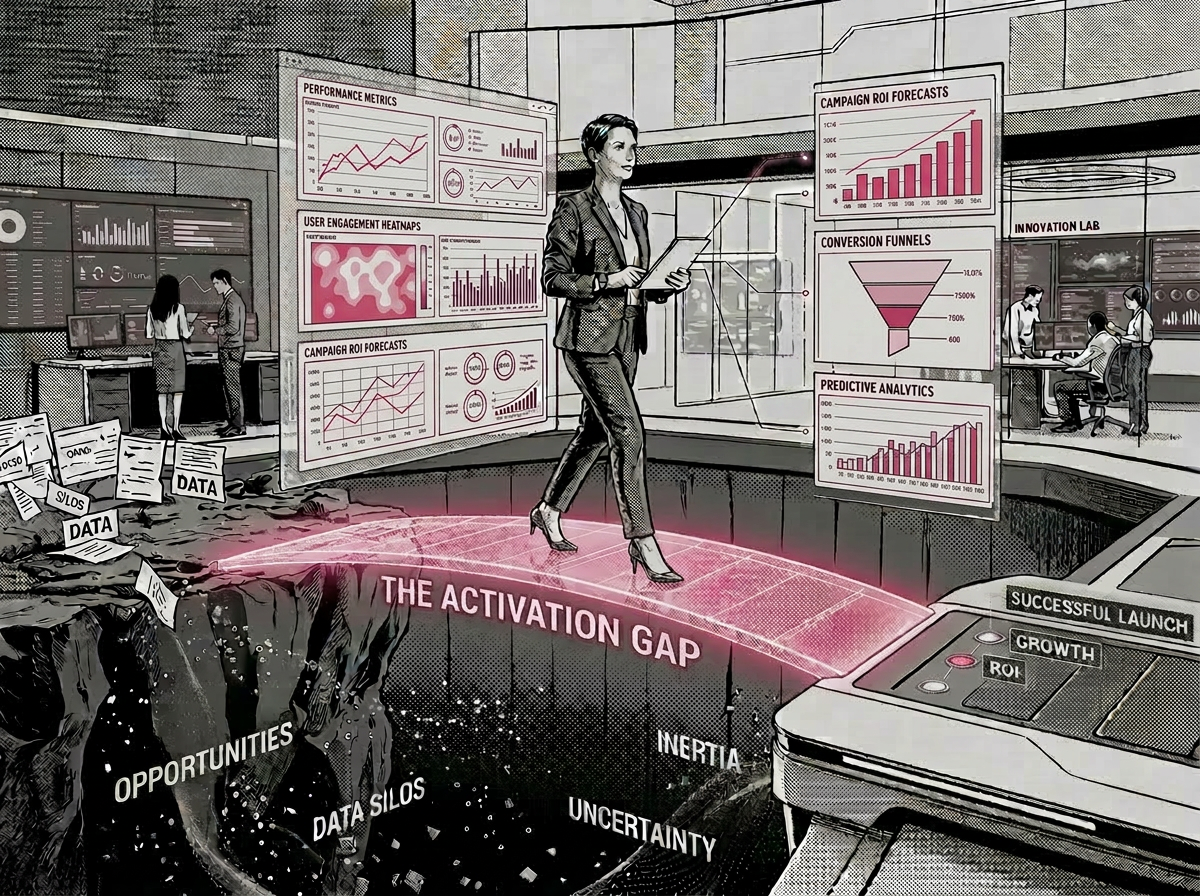
Organizations have advanced in analytics but often struggle to implement recommendations into actionable decisions. The future of decision intelligence lies in “Decision Activation,” which bridges the gap between insight and execution by promoting stakeholder alignment, accountability, and measurable actions, ensuring effective decision-making under uncertainty.
-

Organizations investing in AI often prioritize infrastructure but overlook a critical question: what decision is being improved? This leads to a weak approach that operationalizes conversation rather than intelligence. The concept of a Decision Contract can transform AI from a vague assistant to a governed, decision-oriented system, ensuring effective judgment and measurable economic actions.
-

Analytics should not ask executives to “choose their own adventure.” While exploratory analysis is valuable, open-ended insights without judgment create ambiguity, not clarity. Leaders don’t need more scenarios—they need guidance on which path to take and why. Decision-driven analytics reframes analysis around the decision at hand, explicitly weighing trade-offs, risks, and expected impact. The result…
-

Strategy maps and balanced scorecards are powerful tools—but they’re not causal models. They encode assumptions about how value is created, yet most organizations stop at measurement instead of validation. In this post, I explore why decision-driven analytics is the missing link between strategy frameworks and real business impact—and how it helps insights finally get past…
-

AI has leveled the playing field of analysis. Every enterprise can now generate models, dashboards, and insights at scale. But when analytic power becomes universal, advantage shifts elsewhere—to how well organizations decide with it. In the GenAI era, success will hinge less on analytic sophistication and more on decision capacity: the ability to frame options,…
-

Every organization faces hidden bias in its decision-making—from confirmation bias and groupthink to sunk-cost fallacy. This post includes a practical table of the most common cognitive biases and how to counter them, briefly outlining how a Decision Science approach builds stronger processes that lead to clearer, smarter, and more reliable outcomes.
-

The way we do data science has changed forever. GenAI makes coding frictionless—but without structure it gets messy and invites slippage down rabbit holes. I’ve been refining CRISP-AI, a lightweight process (inspired by CRISP-DM) to work smarter with AI.
-

There is no excerpt because this is a protected post.
-

This latest post explores the distinctions between data-informed, data-driven, and decision-driven approaches to analytics in organizations. It highlights that while many claim to be data-driven, they often over-rely on intuition. Transitioning to decision-driven analytics, which emphasizes defining decisions first and aligning data accordingly, is crucial for effective strategy and impactful outcomes.
-

We are producing more insights than ever—but are we making better decisions? This blog introduces the Decision Science Pre-Analysis Framework, a structured approach to overcoming the Last-Mile Problem in analytics, ensuring insights don’t just inform but actively drive decision-making and meaningful action.